
Valves are the unsung workhorses of the oil and gas sector. From the moment crude oil leaves the wellhead to the point refined products reach a storage tank, a valve is almost always standing between safe, efficient operation and costly downtime. Understanding the different types of industrial valves — and where each one belongs in an oil and gas system — is essential for engineers, procurement teams, and plant managers who want to reduce leaks, control pressure, and keep operations compliant with safety standards.
In this guide, we break down the most common types of industrial valves, explain how they function, and show where each one fits into upstream, midstream, and downstream oil and gas operations. If you’re specifying valves for a new project or replacing aging equipment, this article will help you match the right valve to the right job.
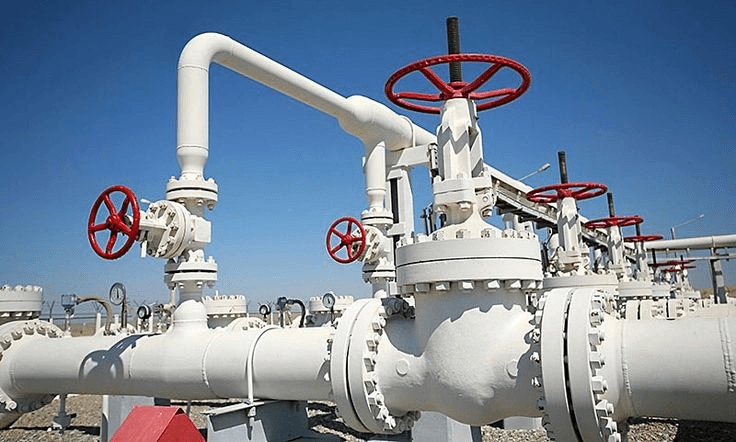
Why Valve Selection Matters in Oil & Gas
Oil and gas systems operate under extreme pressures, corrosive chemicals, high temperatures, and flammable media. A poorly chosen valve can lead to leaks, pressure surges, equipment failure, or worse — a safety incident. Choosing among the various industrial valve types isn’t just a matter of flow control; it directly affects:
- Process safety – preventing overpressure events and uncontrolled releases
- Operational efficiency – minimizing pressure drop and energy loss
- Regulatory compliance – meeting API, ASME, and ANSI standards
- Lifecycle cost – reducing maintenance, downtime, and replacement frequency
Explore our full range of certified valve solutions on our Products page, engineered specifically for demanding oil and gas environments.
Common Types of Industrial Valves Used in Oil & Gas
1. Gate Valves
Gate valves use a sliding gate or wedge to start or stop flow. They are prized for providing a nearly unobstructed flow path when fully open, which minimizes pressure drop. In oil and gas, gate valves are widely used in pipeline isolation, wellhead assemblies, and transmission lines where full open/close operation is more important than fine flow control.
Best for: on/off isolation in high-pressure pipelines Limitation: not ideal for throttling, as partial opening can cause vibration and seat damage
2. Globe Valves
Globe valves feature a movable disc and a stationary ring seat, allowing precise regulation of flow rate. Unlike gate valves, they’re designed specifically for throttling applications. You’ll typically find globe valves in bypass lines, chemical injection systems, and process units where accurate flow control is critical.
Best for: flow-regulation and throttling duty Limitation: higher pressure drop compared to gate or ball valves
3. Ball Valves
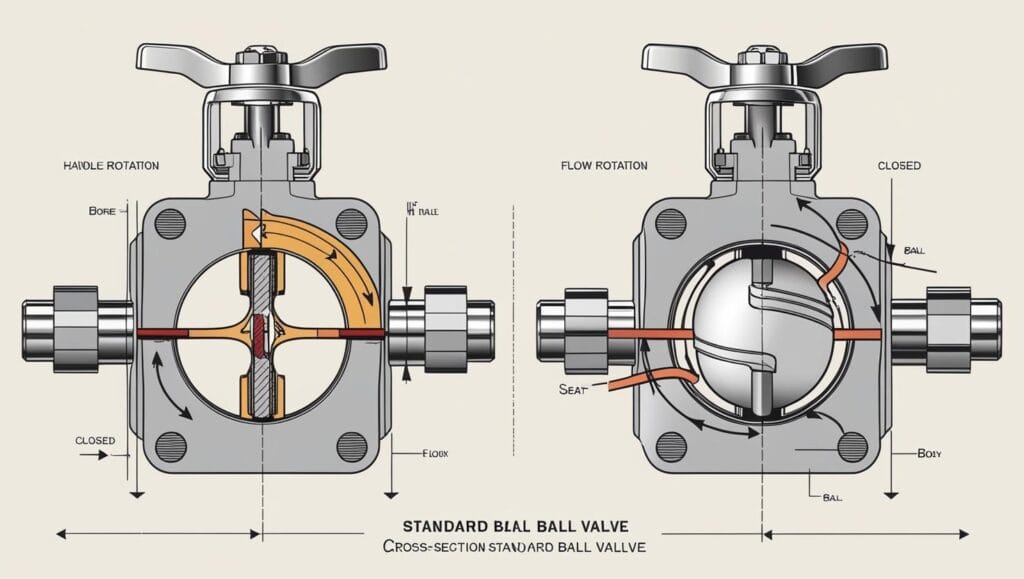
Ball valves use a rotating ball with a bore to control flow — a quarter-turn is all it takes to move from fully open to fully closed. Their tight shutoff, durability, and quick operation make them a favorite across upstream and midstream oil and gas facilities, including gas pipelines, separator units, and metering skids.
Best for: quick shutoff and tight sealing in high-pressure gas and liquid lines Limitation: less suited to fine throttling than globe valves
4. Check Valves
Check valves are one-directional by design — they allow flow in a single direction and automatically prevent backflow. In oil and gas operations, check valves protect pumps and compressors from reverse flow damage and are commonly installed downstream of pumps, in pipeline discharge lines, and at wellhead outlets.
Best for: preventing backflow and protecting rotating equipment Limitation: can cause water hammer if oversized or improperly selected
5. Butterfly Valves
Butterfly valves use a rotating disc mounted on a shaft to control flow. They’re compact, lightweight, and cost-effective compared to gate or globe valves of the same size, making them a popular choice for large-diameter, low-pressure lines such as cooling water systems and tank farm piping in downstream facilities.
Best for: large-diameter, low-to-medium pressure flow control Limitation: not typically rated for very high-pressure service
6. Plug Valves
Plug valves use a cylindrical or tapered plug with a through-hole to control flow, offering a simple, robust design with a tight seal. They’re frequently used in slurry, sand, and high-solids-content applications common in upstream production, as well as in gas distribution networks.
Best for: abrasive or viscous media handling Limitation: higher operating torque than ball valves of similar size
7. Needle Valves
Needle valves feature a slender, tapered point that fits into a matching seat, allowing extremely precise flow adjustment for low-flow applications. In oil and gas, they’re commonly used in instrumentation lines, pressure gauge isolation, and sampling systems.
Best for: precise, low-volume flow control and instrumentation Limitation: not suited to high-flow or large-diameter applications
8. Pressure Relief and Safety Valves
Safety and relief valves automatically open when system pressure exceeds a preset limit, protecting vessels, pipelines, and equipment from overpressure events. These are non-negotiable safety-critical components across refineries, gas processing plants, and offshore platforms, governed by strict API 526 and ASME code requirements.
Best for: overpressure protection on vessels, boilers, and pipelines Limitation: requires regular testing and recertification to remain compliant
9. Control Valves
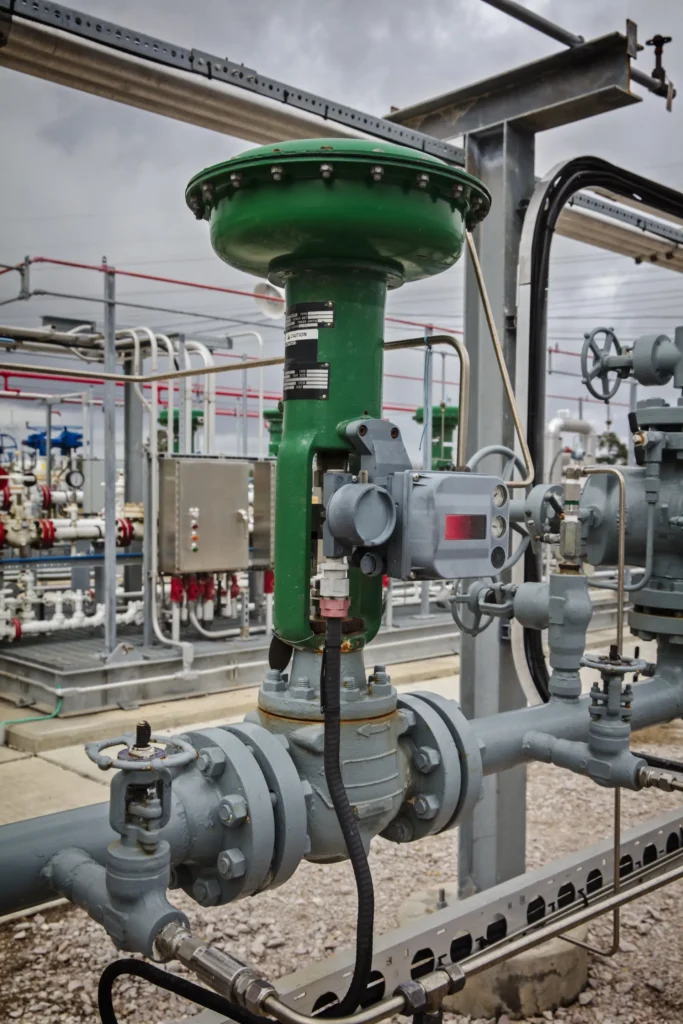
Control valves are automated valves — often globe- or ball-style bodies paired with actuators and positioners — that adjust flow, pressure, or temperature in real time based on signals from a control system. They form the backbone of automated process control in refineries and gas processing plants, managing everything from separator levels to compressor recycle loops.
Best for: automated, continuous process regulation Limitation: higher upfront cost and more complex maintenance than manual valves
Applications Across Upstream, Midstream, and Downstream
Upstream (Exploration & Production): Gate, ball, and plug valves dominate wellhead and Christmas tree assemblies, where high pressure and abrasive fluids demand rugged, tight-shutoff performance.
Midstream (Transportation & Storage): Pipeline systems rely heavily on gate and ball valves for isolation, check valves to prevent backflow at pump stations, and butterfly valves in tank farms for large-diameter, low-pressure transfer lines.
Downstream (Refining & Processing): Refineries depend on a mix of globe and control valves for precise process regulation, alongside pressure relief valves mandated at nearly every vessel and pipeline segment to meet safety codes such as those published by the American Petroleum Institute.
How to Choose the Right Industrial Valve
When selecting among the many types of industrial valves for an oil and gas application, consider:
- Media type – crude oil, natural gas, produced water, or corrosive chemicals
- Pressure and temperature ratings – matched to ANSI/API pressure classes
- Flow control needs – on/off isolation vs. precise throttling
- Material compatibility – carbon steel, stainless steel, or specialty alloys for sour service
- Actuation method – manual, pneumatic, hydraulic, or electric
- Regulatory and safety standards – API, ASME, and local code compliance
Our engineering team can help you navigate these variables. Visit our Valve Engineering Services page or explore Custom Valve Solutions tailored to oil and gas operating conditions.
Maintenance and Long-Term Reliability
Even the best-specified valve will underperform without a proper maintenance program. Learn more in our related articles on Preventive Maintenance for Industrial Valves, Understanding Valve Materials and Corrosion Resistance, and Valve Testing and Inspection Best Practices — all designed to extend service life and reduce unplanned shutdowns.
Why Choose Orion for Your Valve Needs
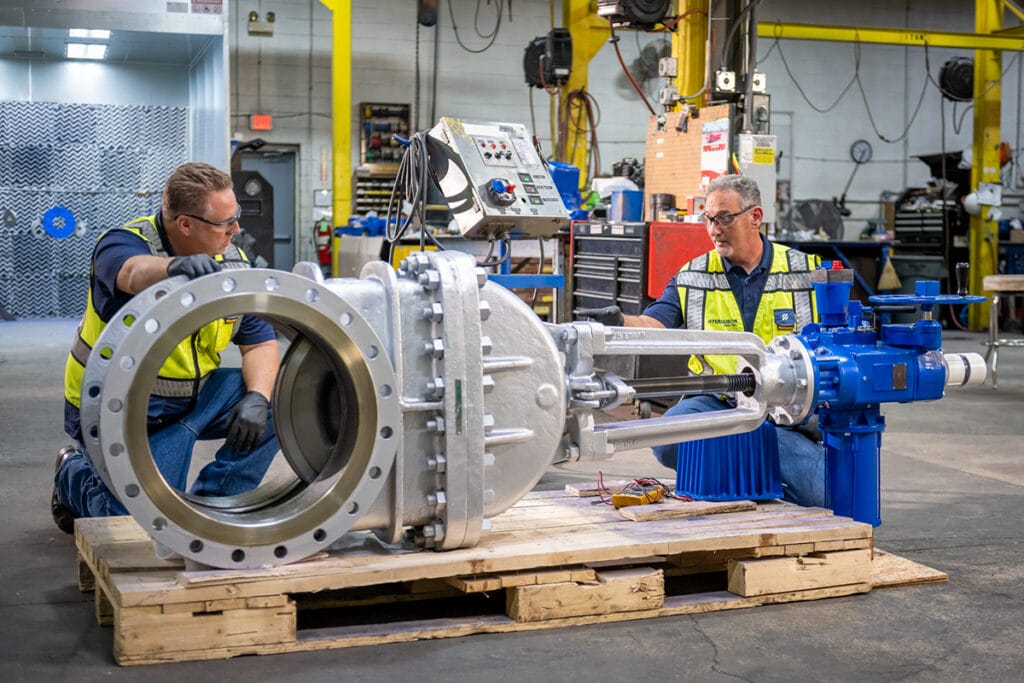
Orion supplies and engineers a full range of industrial valves — including gate, globe, ball, check, butterfly, plug, needle, relief, and control valves — built to withstand the demanding conditions of upstream, midstream, and downstream oil and gas operations. Our team works with you from specification through installation to make sure every valve on your line meets performance, safety, and compliance requirements.
Browse our complete valve lineup on the Products page, read more insights on our Blog, or learn about our Industrial Solutions for Oil & Gas.
Get Expert Guidance on Valve Selection
Choosing the right valve shouldn’t be guesswork. Whether you’re designing a new pipeline, upgrading a refinery unit, or troubleshooting a recurring failure, our engineers are ready to help.
Contact Orion today to speak with a valve specialist, or Request a Quote to get pricing and lead times for your next project.